

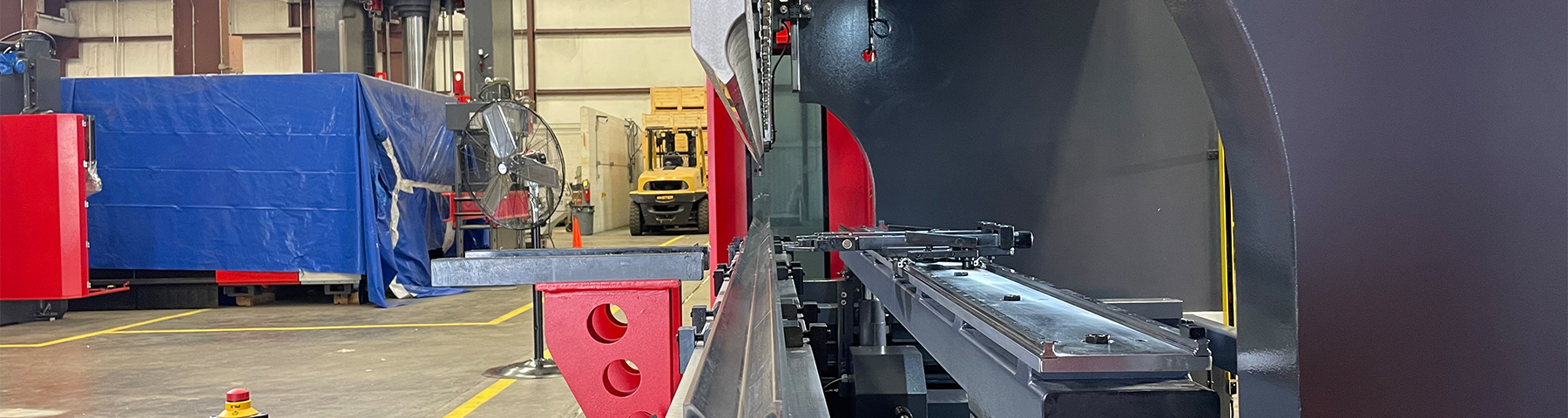
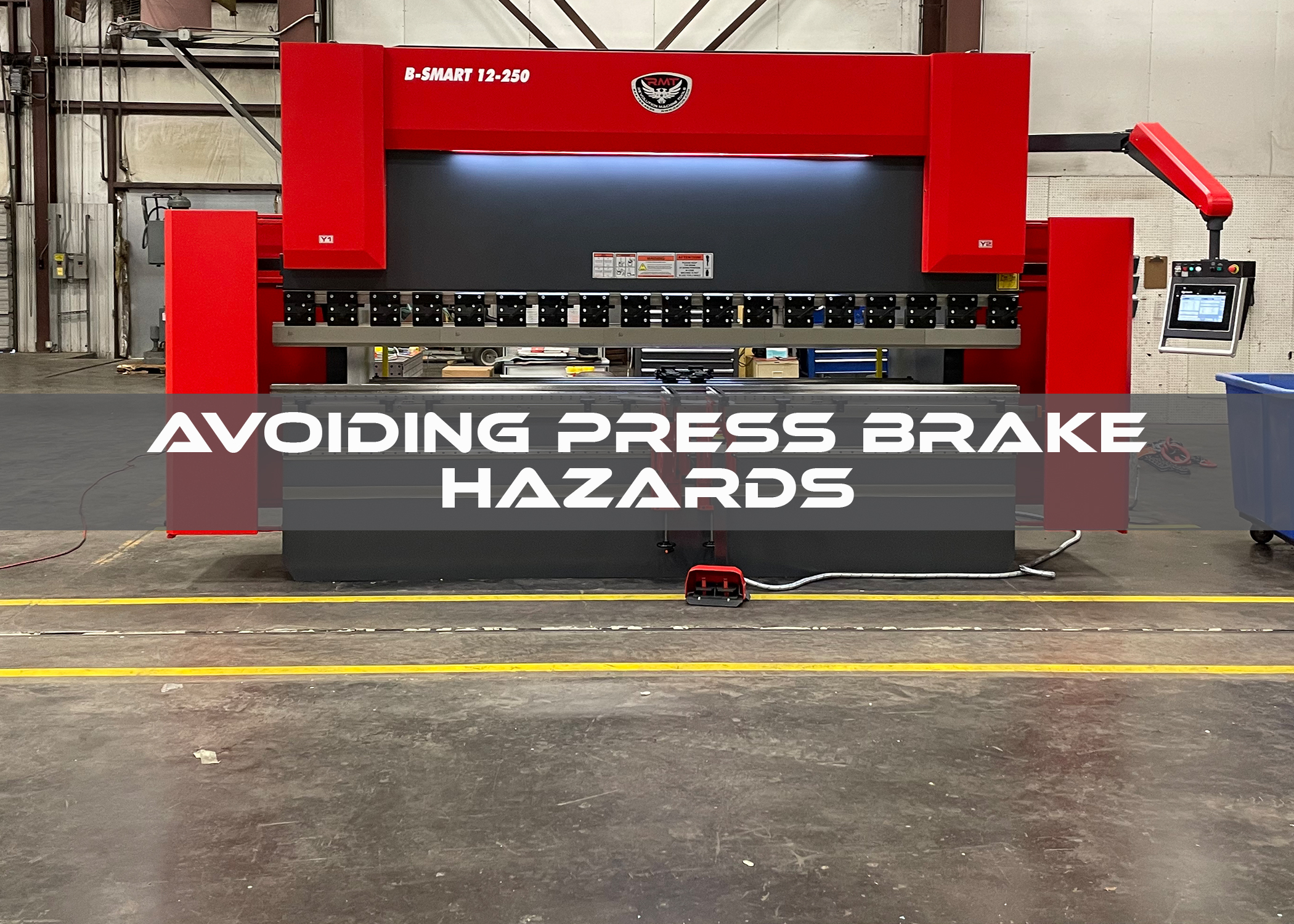
Press brakes are among the most versatile—and dangerous—machines on the metal fabrication shop floor. Delivering hundreds of tons of force to bend sheet metal, these machines present significant risks, including severe pinch points, crushing hazards, impact injuries, and ergonomic strain.
Historically, machine safety has been reactive: an incident occurs, an investigation ensues, and a safeguard is added after the fact. However, a modern, comprehensive safety strategy demands a proactive approach. By integrating safety considerations across the entire operational lifecycle—from machine acquisition and set-up to daily maintenance, operation, and material handling—fabricators can eliminate hazards before they lead to injuries or costly downtime.
Purchase and Specification: Engineering Safety from Day One
Proactive safety begins long before a machine arrives on the shop floor. Specifying the right machine features during the procurement process establishes the foundation for a safe working environment.
- Select the Right Drive Technology. Modern servo-electric and hybrid press brakes offer significant safety advantages over older mechanical or purely hydraulic models. Electric and hybrid systems can stop RAM movement almost instantaneously and offer superior control over positioning and speed.
- Integrate Advanced Safeguarding Systems. Modern optical safeguarding devices (such as active optoelectronic protective devices, or AOPDs) are essential. Laser-based systems that move with the upper beam protect the point of operation without impeding operator efficiency or restricting light. Ensure new machines meet or exceed relevant standards, such as ANSI B11.3 in North America or EN 12622 in Europe.
- Ergonomics and Controls. Select machines with customizable control heights, adjustable foot pedals with protective enclosures, and ergonomic support arms. Ensuring the machine can adapt to operators of varying heights reduces physical fatigue, a primary driver of operational error.
Set-Up and Tooling: Establishing Safe Baseline Operations
Proper setup and tooling management ensure the press brake operates predictably and safely during production runs.
- Tooling Selection and Inspection. Inspect punches and dies for cracks, chips, or excessive wear before installation. Damaged tooling can fail catastrophically under tonnage, ejecting metal shards at high speeds.
- Safe Tool Changing Procedures. Implement strict protocols for tool changes. Utilize safety clicks or safety pins for upper tooling to prevent dies from dropping during insertion or removal. For heavy tooling, require the use of overhead cranes, die carts, or hydraulic clamping systems to eliminate manual lifting risks.
- Tonnage Limits and Programming. Over-tonnage is a leading cause of tool exploding and machine failure. Operators and setup technicians must calculate exact tonnage requirements based on material type, thickness, bend angle, and V-die opening. Modern CNC controls should be programmed to automatically restrict tonnage to safe limits based on the loaded tooling profile.
Maintenance and Inspection: Preventing Mechanical and Electrical Failures
A proactive maintenance program ensures safety features remain fully functional and structural components do not degrade unnoticed.
- Daily Pre-Shift Inspections. Require operators to perform a quick, structured daily check. This includes testing emergency stop buttons, verifying light curtain or AOPD alignment, checking foot pedal enclosures, and inspecting hydraulic lines for leaks or pressure drops.
- Scheduled Preventive Maintenance (PM). Establish a strict PM schedule focused on critical safety components:
- Hydraulics. Inspect valves, seals, and cylinders for internal bypass or pressure drift that could cause unintended RAM movement.
- Braking Systems. Periodically measure stopping distance and response times to ensure the safeguarding system’s safety distance calculations remain valid.
- Electrical Controls. Inspect wiring, relays, and safety interlocks for wear or unauthorized bypasses.
- Lockout/Tagout (LOTO). Maintenance tasks—especially those requiring entry into the point of operation or backgauge area—must strictly adhere to LOTO protocols to prevent accidental energization.
Operation: Empowering Operators with Best Practices
Even the most technologically advanced press brake relies on well-trained, alert operators following disciplined procedures.
- Point of Operation Awareness. Operators must keep hands completely clear of the die space while the RAM is in motion. When working with small parts where hands must inevitably be close to the bend line, hand tools, vacuum lifters, or specialized sheet supporters should be used instead of direct manual holding.
- Understanding “Sheet Whip.” As metal is bent, the trailing edge travels rapidly upward in an arc—a phenomenon known as sheet whip or pinch-up. Operators standing inside this arc risk being struck in the chest or face. Training must emphasize positioning body parts outside the travel path of the material.
- Personal Protective Equipment (PPE). Standard PPE for press brake operation includes safety glasses with side shields, cut-resistant gloves rated for sharp metal edges, and steel-toe footwear. Loose clothing, jewelry, and unsecured long hair must be strictly prohibited to prevent entanglement.
Material Handling and In-Process Flow: Managing External Hazards
Safety extends beyond the machine envelope to how raw materials and finished parts move through the bending station.
- Managing Heavy or Large Sheets. Bending large or heavy sheet metal poses significant physical hazards. Utilize sheet lifters, front support arms, or robotic bending assistants to handle large plates. This not only prevents back injuries but also stabilizes the sheet during the bend, reducing unpredictable material movement.
- Staging and Housekeeping. Maintain a clear, uncluttered workspace around the press brake. Oil slicks, metal off-cuts, or scattered tooling near the operator station create tripping hazards that could cause an operator to fall toward the point of operation or accidentally depress the foot switch.
- Material Edge Preparation. Deburr raw sheet metal edges before sending parts to the press brake station. Sharp burrs can cause severe lacerations or interfere with precise positioning against backgauge stops, leading to awkward operator adjustments near the die space.
A Life-Cycle Approach to Hazard Mitigation
Avoiding press brake hazards requires more than relying on a single light curtain or a printed warning label. By adopting a proactive, life-cycle approach, manufacturers build safety into every stage of the bending process. Investing in modern equipment, enforcing disciplined set-up and maintenance routines, prioritizing comprehensive operator training, and managing material handling risks creates a culture where safety and productivity reinforce one another.


