

Recently in the Metal Fabrication Tips social media group, a member posted the following: “I’m curious to hear from those who work in sheet metal fabrication: What’s a sheet metal forming technique you think is becoming a lost art? Also, with all the modern tools and equipment available today, are there any traditional methods you still prefer or think every fabricator should learn? I’d love to hear everyone’s thoughts and experiences!”
While one commentor wryly said, “All of them” (complete with a smiley face emoji), many members of the group responded thoughtfully on the subject, with most of their replies falling into two main categories: pattern development and hand forming.
Pattern Development
Many responses related to pattern development (part layout):
- “Maybe not a traditional method but laying out a part by hand and using a hand brake!” (Another group member added to that by saying, “I don’t think many would know even how to start parallel or conical development, let alone anything complicated.)
- “Pattern making and marking out.”
- “Fabrication layout.”
- “Pattern development.”
- “Radial line development by hand.”
- “Pattern development! Even for pipe, engineer supplies the patterns or laser cut parts.”
- “Hand layout. Making a square to round by hand.”
Pattern making and marking out in metal fabrication refer to the foundational layout processes of creating a full-sized template or blueprint of an object and transferring those precise dimensions directly onto raw metal sheets or stock before any cutting, bending, or shaping begins.
Hand Forming
Another common category was hand forming (using a hammer, an English Wheel, etc.):
- “Hammer forming.” (He then clarified after a question that he was speaking about “whole body parts.”)
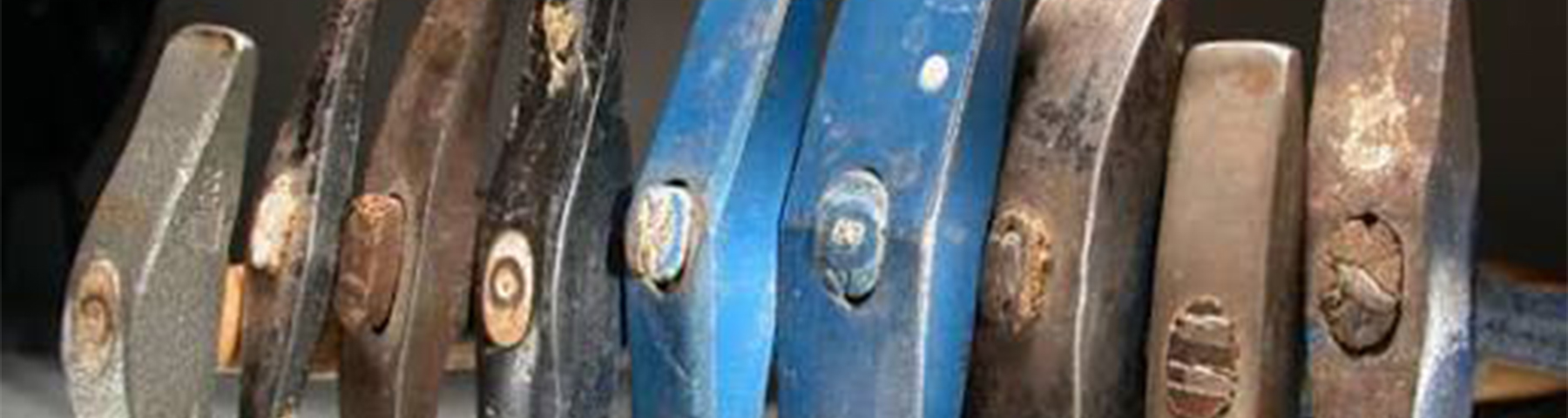
- “I would say that the sandbag, hammer, and English wheel don’t get used as much today as years ago, I’m not sure however how many other people are still actively doing it.”
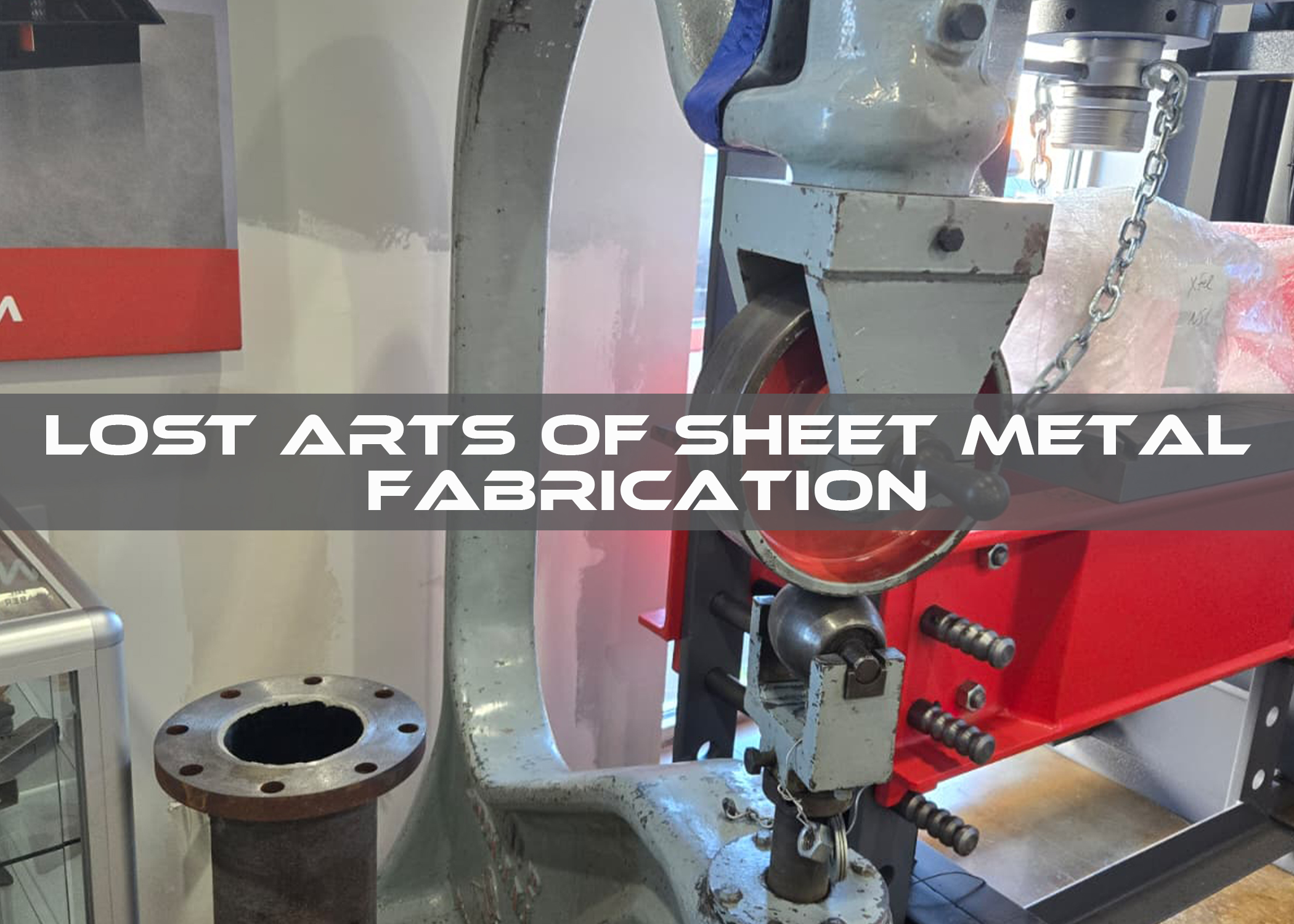
- “English wheel!!! Good luck finding one and a good one at that, it’s gone to stamping drawing and then welding!!! Don’t even get me started with an experienced hand to teach!!! I prefer a true shaped piece for like a gas tank!!! The other thing being lost is hammered shaping, everyone just thinks blacksmithing.”
- “I love my wheel and my planishing hammer.”
- “We do a lot of shrinking and stretching coupled with hammer forming and English wheel. It really surprises me how many think it’s a magic trick moving metal to where you want it to go, and how many don’t get triangulation or segmentation bending all being lost to the CAD/CAM generation.”
- “Jello molding on a piece of pipe, different sized pipes, of course, different Ball Peen Hammers. I make a template and I pound it into the pipe to Jello mold the Sheet Metal.”
- “Metal stretching with large dies and hammer working.”
- “Hammers and dollies.”
- “Planishing hammer, English wheel. Shrinker /stretcher… hand forming. It’s an art form. Mad respect to those who do it well.”
- “English wheel. We have one at the shop, but the boss thinks because he doesn’t know how to use it, none of us know how to use it.”
- “Use my old cast iron English wheel every day. I find it almost like therapy.”
Some also mentioned chasing and repoussé, which are complementary metalworking techniques used to shape and ornament flat sheets of metal into three-dimensional reliefs using hammers and punches.
- “Chasing & Repoussé.”
- “Repoussé.”
- “The true lost art in metal forming is not the English wheel; there are plenty who do that. The real lost art is Chasing & Repoussé! How many of you even know what that is???”
Unlike modern hydraulic presses that stamp complex shapes in seconds, the English wheel requires an artisan to form compound curves—like classic car fenders or vintage aircraft cowlings—by manually rolling metal between two steel wheels. It relies entirely on tactile feedback, muscle memory, and a profound understanding of how metal stretches and flows under pressure.
Related is the art of manual planishing and heat shrinking (often called “tucking”). Before automated rollers, craftsmen used rhythmic hammer-and-dolly techniques, paired with the strategic application of an oxy-acetylene torch, to coax flat sheets into dramatic, rigid contours without compromising the material’s thickness.
Other Responses
- “Hell, knowing what a bend deduction is can be a tall order.”
- “Coining, or some call it pressure bending.”
- “Press brake bump-forming. Good luck finding guys that can bump a 10-14ga SS double or triple through 12-14ft or longer and still have symmetrical tangents & straight flanges. Can’t program an Amada brake to do that. Or bump-form cones or off-set transitions. (Another responded with, “That’s all just another regular workday for me, but yes, it’s becoming a lost art.”)
- “Forming square to rounds.”
- “Square to rounds, cones, developing and forming!”
- “Half the trick is telling the machine what it doesn’t know.”
- “Spin forming. Never had the chance to try that. Looks fun, but when you watch someone do it you can tell it’s no easy task, even though they make it look so.” (Spin forming is a manufacturing process that shapes flat metal discs or tubes into axially symmetric, hollow parts by rotating them at high speeds on a lathe while pressing rollers or tools against the material.)
- “Just because something is faster doesn’t make it better! Just because anyone can push a button on a press doesn’t mean they can do anything else!! My opinion is too many skilled jobs are pushed out, because people don’t want to pay the wages or compensation for experience. Oh, we can make 4000 an hour this way so if one’s wrong, we’ll just sell them a new one! And there’s way too many missing skills in the marketplace, and disrespect for the senior workers! An old timer has extreme value to companies—they teach, walk new guys through the problem, and when the crew has no clue how to do something the old guy steps in and does the job himself!! Company is the hero and gets returned clients!!! The very definition of quality was formed on the skilled labor and experience!!”
- “Making it look easy is the hardest part. If we’re talking forming, everyone should know layout and development. If we’re talking shaping, there’s 2000 years of tools and techniques that have been developed and refined. You’ll never run out of learning something to master. Here, hand tools make the skills, and power tools pay the bills.”
The Art of Combining Tradition with Modern Innovation
Old-time metalworkers of a century ago (or even just a decade) would be amazed at what the field has to offer today. Automation and CNC machining have revolutionized sheet metal fabrication, bringing unprecedented speed and precision to the industry. However, this digital shift has pushed several foundational, hand-forming techniques to the brink of obscurity. While modern manufacturing is undeniably more efficient, these fading artisan techniques remain irreplaceable for bespoke automotive restorations, vintage aerospace prototyping, and custom metal sculpture.
Automated machines cannot easily scan a warped, 70-year-old vintage car panel and perfectly recreate it without massive engineering overhead. A fabricator with a planishing hammer and an eye for symmetry can shape a patch panel in a fraction of the time.
Learning traditional hand-forming techniques gives modern fabricators a major competitive advantage by filling the gaps that automated machinery can’t handle. While CNC machines offer unmatched speed and repetition, they lack the intuition, adaptability, and deep material understanding of a skilled artisan.
Wise fabricators strive to keep up with all the latest innovations, while perpetually mastering the classic techniques of yesteryear.


